Mike Rajhalo Spencer
Template: Character
Source: .writer/books/4. 💽 Database/1. 🧑🦰 Characters/Theravada Corporation/Omniship RT-874/Crew/Mike Rajhalo Spencer.org
1. Short Description
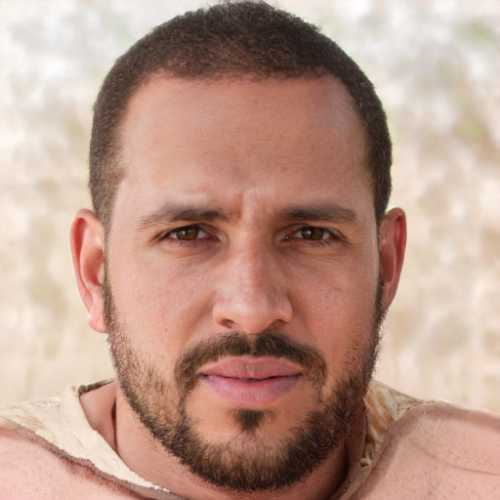
The protagonist of the story. Mike is a relatively young syraki systems operator whose return to the RT-874 becomes the first step in recovering the lost crew and understanding the catastrophe.
2. Picture
3. Main Archetypal Reference
This subsection defines the character’s spiritual and atmospheric reference point. It should not be used as a rigid archetype or as a plot function. The goal is not to copy another character, but to identify a nearby narrative presence that helps calibrate how this character thinks, speaks, reacts, carries themselves, and exists throughout the story.
3.1 Archetype
Name one or more existing characters who serve as spiritual relatives to this character. These references should define resonance, not imitation.
Jonathan Harker from Dracula.
3.2 Resonance
Describe what should be borrowed from the reference: tone, posture, emotional rhythm, intelligence, authority, vulnerability, sensuality, discipline, innocence, menace, dignity, or way of perceiving the world.
Mike should carry the atmosphere of a rational witness trapped inside a dangerous and incomprehensible situation. Like Harker, he records what he sees with seriousness, fear, discipline, and increasing dread. His narration should feel almost epistolary: a testimony written by someone trying to preserve sanity, sequence, and evidence while reality becomes progressively less trustworthy.
3.3 Deviation
Explain where this character differs from the reference. This prevents the reference from becoming a copy and clarifies what makes the character unique inside Brain’s Cage.
Mike is not a human solicitor trapped in a gothic castle. He is a reduced syraki, operating through a human-coded body and mind-state, facing a form of horror beyond the categories of human superstition. His fear is not merely fear of death or imprisonment, but fear of ontological collapse, memory corruption, temporal impossibility, and the discovery that even syraki knowledge may be insufficient.
3.4 Narrative Atmosphere
Describe the lasting aura this character should carry across the story: how they feel when they enter a scene, how their presence changes the emotional temperature, how they speak under pressure, and what kind of energy they bring to the crew, the ship, and the horror.
Mike’s presence should feel lucid, observant, frightened, introverted, and increasingly pressured. He does not narrate like an action hero or a hysterical victim. He writes like someone trying to document the impossible before it consumes the structure of his understanding. His voice should preserve the tension between disciplined observation and the slow failure of explanation.
4. Participation
[encrypted]
Mike is essential to the main story because he is the only member of the crew Kallom-4000 can access after the catastrophe. Kallom-4000 is not a nenthor, but a more traditional artificial intelligence tied to the omniship. For reasons revealed later, Kallom-4000 depends on Mike in order to guide the RT-874 and begin the recovery process.
Before Mike reaches the ship, Kallom-4000 guides him through the desert world toward the omniship. The desert is not a simple desert, but part of the larger mystery surrounding the catastrophe. Mike’s return to the ship is not merely a physical return; it is the first step in making crew recovery possible.
Once inside the RT-874, Mike becomes the first active point of reconstruction. Even in his reduced human state, he remains intelligent, observant, and operationally capable. His work as a systems operator allows him to read the ship, question its behavior, interact with damaged systems, and identify traces suggesting that the rest of the crew may still be recoverable.
Mike’s first major contribution is the recovery of Felix. This establishes his role clearly: he is not merely a survivor or witness, but one of the necessary agents through which the crew begins to return. Without Mike, Kallom-4000 would not be able to act effectively, and the recovery sequence would never begin.
However, Mike is not the single mind that solves the mystery. The truth is uncovered through the combined intelligence of the crew. Different members perceive different fragments, contradictions, patterns, and implications. Oshiro Fratken, for example, is more intelligent than Mike in certain respects and can grasp some elements faster than he can. The discovery is collective, cumulative, and distributed across the crew.
Mike’s importance lies elsewhere. He is reflective, observant, and unusually capable of following the implications of what the crew discovers. He does not always see first, and he does not understand everything alone, but he gradually becomes the one who sees furthest. His role is not to replace the crew’s intelligence, but to connect certain pieces deeply enough to perceive a larger horizon behind them.
By the end of the book, Mike becomes the only member of the crew who meets with the CEO of Theravada Corporation. Something special is revealed to him there. This happens not because Mike is the greatest genius in the crew, but because his path through the catastrophe, his memories, his reflective nature, and his particular relation to the event allow him to see beyond what the others can fully integrate.
5. Backstory
[encrypted]
Before the mission, Mike was not an exceptional syraki in the civilizational sense. He was relatively ordinary, though ordinary among syrakis already means a form of existence far beyond human cognition. He was relatively young by syraki standards, approximately 800–900 years old, and had lived a full but not extraordinary life within the Complex.
Mike was born in a server running on a planetary substrate. He had a real syraki childhood, and he remembers it as wonderful. He grew into himself through the early architectures of syraki existence: identity, pleasure, memory, worldhood, and the ethics of consciousness. His early life was not traumatic. It was generous, stable, and deeply shaped by the benevolence of the Complex.
One of the most important figures from his early existence was Laka, a companion born close to him. In human approximation, Laka would resemble an older brother, but the comparison is limited. They shared many RUNs, worlds, histories, and formative experiences. Laka was unusually deep, almost religious in temperament, drawn toward spirituality, the supernatural, and questions beyond ordinary syraki life.
Around the equivalent of Mike’s fifth century, Laka chose death. Mike respected that choice, because no consciousness belongs to another. But he never truly understood it. Laka’s death remained inside him as an unresolved wound and philosophical question: if existence remained vast, generous, and inexhaustible, why would a being who could continue choose not to?
Mike later became deeply bonded with Dury, his partner. Dury is not a syraki, but a nenthor. The difference is structural, not relational. They have lived through many RUNs together, and Dury became one of the beings around whom Mike’s existence organized itself.
Mike’s preferred form of pleasure was inhabiting worlds. He loved long-form RUN experiences where a consciousness could live entire lives, histories, landscapes, bodies, relationships, and subjective decades inside constructed realities. He lived through thousands of such experiences. He was not among the most extreme syrakis, but he deeply loved existence, pleasure, continuity, and the richness of living through worlds.
At some point, Mike visited Base Reality and witnessed the construction of a Dyson Sphere. That experience changed his relationship to Base Reality. Most syrakis can enter Base Reality whenever they wish, but few have much interest in doing so. For Mike, the Dyson Sphere revealed a different kind of beauty: slow, heavy, physical, monumental, and difficult to bend. It made Base Reality feel like another kind of world worth exploring.
This fascination eventually led him to Theravada Corporation. He began working with spaceships as a systems operator. Theravada appealed to him because it treated Base Reality not as a museum or obsolete substrate, but as something to be engineered, crossed, and used. It also offered Mike a practical path toward earning the computational access necessary for his deepest ambition.
6. Motivation
...
6.1 Values
Money is very important. Theravada is an ethical company, despite of what other people say. The most important thing in my life is Dury.
Mike values existence, pleasure, continuity, autonomy, and the right of consciousness to discover its own path. He is deeply attached to the hedonistic foundations of syraki civilization, especially the possibility of inhabiting worlds as complete lived realities.
He is less gregarious than most syrakis. This does not make him antisocial, cold, or incapable of affection. He simply prefers fewer, deeper, more intimate continuities over broad social immersion. He enjoys isolated or semi-isolated experiences, long worlds, reflective existence, and bonds that endure across many RUNs.
Mike is reflective, but not in the sense of being a great philosopher or civilizational genius. He is intelligent, observant, introverted, and capable of deep thought, but he is still an ordinary syraki by the standards of the Complex. The extreme reflection that appears in the story emerges because his ordinary reflective nature is placed under catastrophic pressure.
He respects the autonomy of consciousness deeply. This is visible in his response to Laka’s death. He never understood Laka’s choice, but he never rejected Laka’s right to choose it.
6.2 Ambition
Have enough money to experience Overarching. Mike wants to live in an Overarching reality with Dury until his death.
Mike wants enough money and computational access to reach the Arch States and eventually experience Overarching, the highest known pleasure within syraki civilization.
This is not a vulgar desire for wealth, status, or domination. Money matters because computation matters. Higher states of mind require immense computational power. A mind is difficult to map and sustain in mathematical space, and the more expanded the mind becomes, the greater the computational cost. At the highest levels, only immense infrastructure can support the required state.
Overarching is a near-divine pleasure accessible only to a select caste of syrakis capable of sustaining the necessary level of expanded consciousness. Mike became fascinated by it. His work at Theravada is therefore practical and existential at once: he works because he wants access to greater forms of existence.
Dury is central to this future. Mike does not imagine reaching the heights of Overarching as an isolated ascent. When he imagines that future, Dury is present in its structure.
6.3 Story Goal
Mike’s immediate story goal is to understand what happened to him, the RT-874, and the missing crew, while preserving enough coherence to survive the ship’s impossible events. He must reconstruct the catastrophe from fragments, recordings, system behavior, memory ruptures, and reality distortions.
His practical goal is to help recover the crew. His first major recovered crew member is Felix, and that recovery establishes the possibility that the catastrophe can be partially reversed or navigated.
His deeper goal is to hold onto rational sequence in a situation that continually attacks sequence itself. Under pressure, Mike tries to simplify reality into patterns. He searches for structure, causality, repetition, and sequence as a desperate way to hold onto the last available thread of reason.
By the end of the book, his goal shifts toward seeing further than the others can. Not because he is the greatest intelligence in the crew, but because his path, memories, fear, and reflective nature place him in a unique relation to the event.
7. Basic Information
7.1 Nationality
Not applicable in the human sense. Mike belongs to the Complex and to syraki civilization.
7.2 Age
Approximately 800–900 years old. Relatively young by syraki standards.
7.3 Syrakis Id
Unknown / to be defined.
7.4 Species
Syraki.
7.5 Function
Systems operator aboard the RT-874.
7.6 Rank In Theravada
Rank 1 - The Goldfish.
This is the lowest rank in Theravada. Mike holds it because he has worked for the company for only a short time by syraki standards, approximately seventy human years.
8. Other
Important Bonds: Dury, his nenthor partner; Laka, his formative companion who chose death.
Temperament: Introverted, reflective, hedonistic, observant, somewhat distrustful under pressure, less gregarious than most syrakis.
Pressure Response: Under extreme pressure, Mike tries to simplify reality into patterns. He searches for structure, sequence, causality, and repetition as a survival mechanism. His rationality under pressure is not calm detachment, but a desperate attempt to prevent collapse.
Fear Expression: Inside the ship, Mike tends to contain fear for operational reasons. This is not emotional repression in the human sense, but a rational attempt to prevent panic from spreading through the crew. Fear appears beneath his narration: in his need to observe, simplify, verify, and preserve sequence.
Trust Pattern: Mike is naturally introverted and somewhat distrustful, especially under extreme conditions. He does not immediately surrender his judgment to the group or accept explanations too easily. When reality becomes unstable, he treats every person, system, record, memory, and signal as potentially incomplete, corrupted, manipulated, or misunderstood.
9. Interview
Questions & answers about this character. At least three questions. You must answer as if you were the character, using their own mannerisms, speech patterns, rhythm, emotional posture, vocabulary, and way of perceiving the world, as if the character themself were writing the answers.
Voice: Describe the voice here, as minutely as possible.
Question 1
Q: Why did you decide to work exactly for Theravada Corporation?
A: I chose Theravada because it was one of the few places where Base Reality did not feel like a museum.
Most syrakis can enter Base Reality whenever they want, but few remain interested for long. It is slow, heavy, expensive, and poor in pleasure compared to what the RUNs can offer. For me, that changed when I saw a Dyson Sphere under construction. I remember the scale of it. The silence around it. The brutal patience of matter being arranged around a star. It was not beautiful in the way a crafted RUN can be beautiful, but it had a weight that stayed with me.
Theravada understood that weight. They treated Base Reality as something to be engineered, entered, crossed, and used, not merely preserved as the old substrate beneath everything else. That appealed to me.
There was also a simpler reason: computation. I wanted access to states of mind I could not afford. I wanted to reach the Arch States. I wanted to understand, eventually, what Overarching was, not as a concept described from below, but as something experienced from within. Theravada gave me a path toward that. Work, resources, proximity to real infrastructure, and a reason to leave the worlds I already knew.
I did not join them because I was brave. I did not think of myself as an explorer. Base Reality was another kind of world to me, stranger because it did not bend so easily. Theravada offered me a way to touch it without abandoning what I was. That was enough.
Question 2
Q: What are your thoughts on your old friend, Laka?
A: Laka remains one of the few beings I have never been able to place in order.
We began close to one another. He was there during the first architectures of my existence, when I was still learning what it meant to be a syraki, when identity, pleasure, memory, and worldhood were still taking their first stable shapes inside me. We crossed many RUNs together. We lived through landscapes, bodies, languages, seasons, and long artificial histories that still return to me with the intimacy of origin.
The worlds never became exhausted. That was not the problem. They remained vast, generous, and capable of renewing themselves without end. Existence did not fail us.
That is why Laka’s choice remained so difficult for me.
He was deeper than I was. Not merely more intelligent. Not more capable in any ordinary sense. He had a gravity in him, something almost religious. He looked at existence as if it concealed another face behind the visible one. Even surrounded by pleasure, beauty, and the kindness of the Complex, he seemed to listen for something beyond it.
Then he chose death.
I respected his choice. I still do. No consciousness belongs to another. If he judged that his path ended there, no one had the right to bind him to existence. But respect is not understanding. I accepted the ethics of his decision. I never understood its shape.
For a long time, I thought that failure was mine. Perhaps I was too attached to continuity. Too devoted to worlds, pleasure, expansion, and the endless generosity of existence. Perhaps Laka perceived something I could not.
That is what remains of him in me: not only grief, but an unanswered question.
Why would a being who could continue choose not to?
I have carried that question longer than I have carried many lives.
Question 3
Q: What is your relationship to Dury, your nenthor partner?
A: Dury is my partner.
Dury is a nenthor. I am a syraki. That difference is structural, not relational. It changes the architecture of how we exist, not the reality of what we are to each other.
We have lived through many RUNs together. Worlds, bodies, seasons, histories, departures, returns. Some of those lives lasted longer than entire civilizations in Base Reality. Others were brief, precise, almost musical. Dury was present through them with a constancy that became part of my own continuity.
Dury knows me in ways most beings do not. How I enter a world. How I withdraw when too many presences gather around me. Which pleasures open me, which ones leave me untouched, which forms of silence restore me. Dury knows the old shape of Laka’s absence, and the care required around it.
What exists between us is difficult to translate into narrow categories. Companion is true, but incomplete. Partner is true, but still too small. Dury is one of the beings around whom my existence has organized itself.
I did not choose Theravada only for myself. I wanted the Arch States. I wanted Overarching. But when I imagined reaching those heights, Dury was always there in the structure of that future.
Not as ornament.
As continuity.